


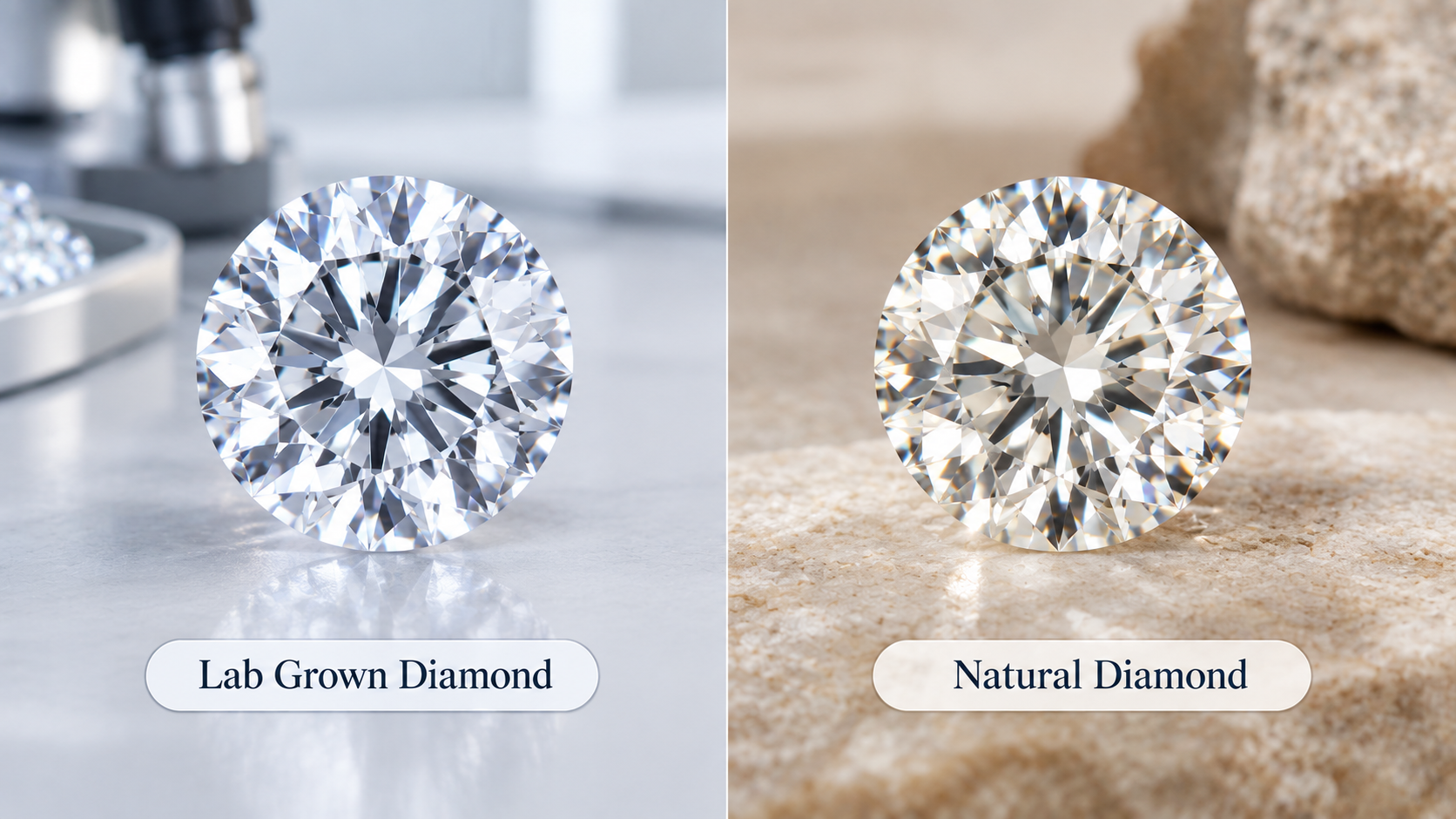
Choosing between lab grown diamonds and natural diamonds involves more than appearance. Origin, quality, price and certification can all influence the decision. Since both can look remarkably similar after cutting and polishing, understanding their key differences can help buyers compare options with greater confidence.
Understanding lab grown diamonds vs natural diamonds makes the buying process simpler. Lab grown diamond jewellery is created through controlled technology, while natural diamond jewellery uses diamonds formed through geological processes. Their pricing origin and market considerations can also differ.
What Are Lab Grown Diamonds?
Lab grown diamonds, also known as laboratory-grown diamonds or lab manufactured diamonds, are sometimes referred to as synthetic diamonds. However, they are genuine diamonds with essentially the same chemical, physical and optical properties as natural diamonds, rather than diamond simulants such as cubic zirconia. FTC guidance on diamond terminology.
How Are Lab Grown Diamonds Made?
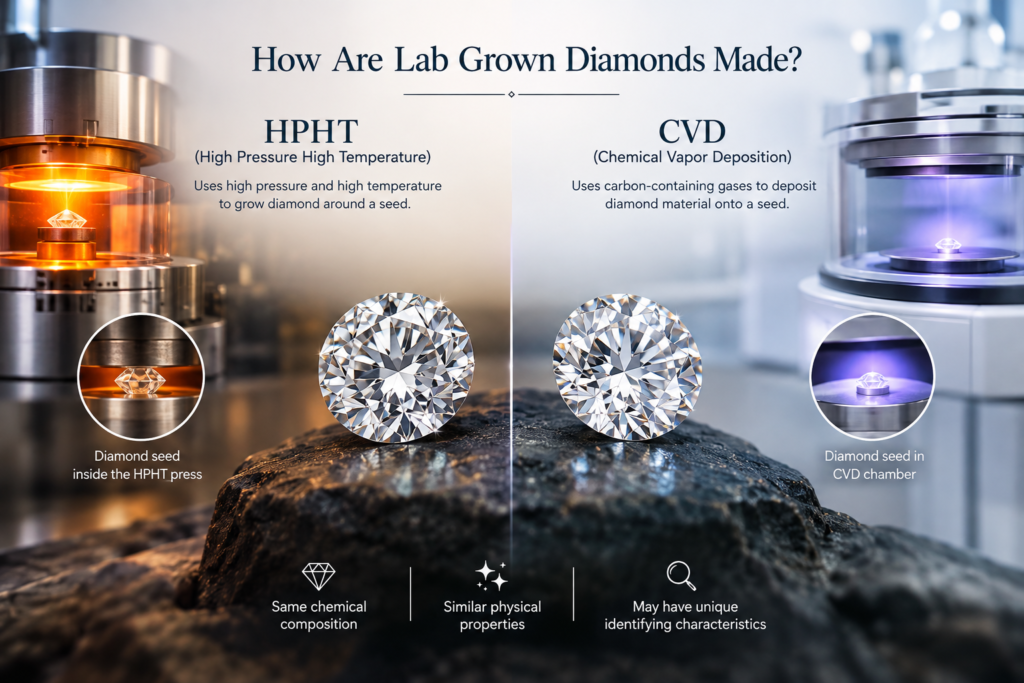
Two main technologies are used:
- HPHT: Uses high pressure and high temperature to grow diamond around a seed.
- CVD: Uses carbon-containing gases to deposit diamond material onto a seed.
The different growth processes can leave characteristics that help specialised laboratories identify laboratory-grown stones, as explained in the GIA guide to HPHT and CVD diamond growth.
What Are Natural Diamonds?
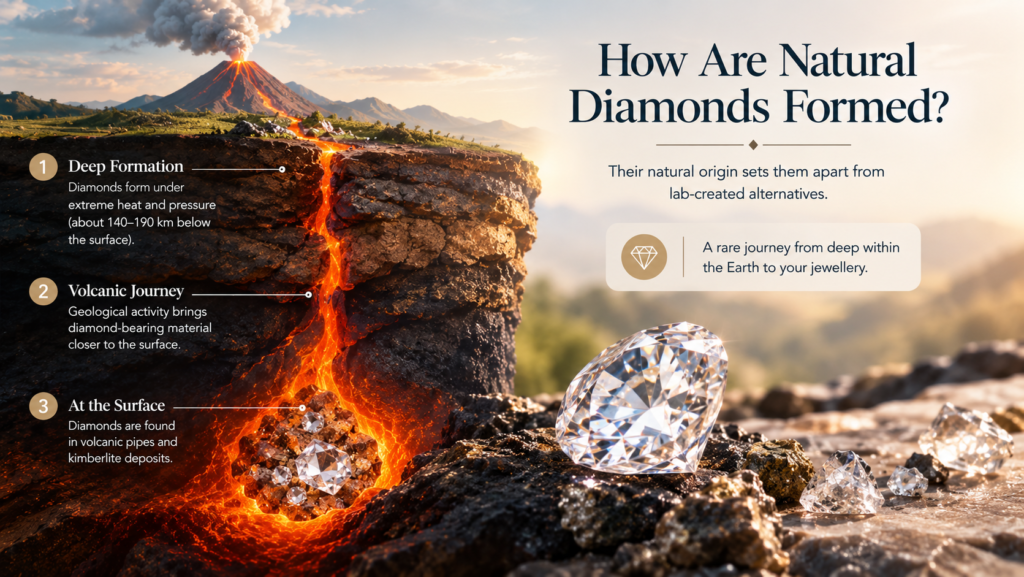
Natural diamonds form through geological processes deep within the Earth, where carbon undergoes intense heat and pressure over extremely long periods. They are later recovered from diamond-bearing rocks through mining. GIA guide to diamond origin.
How Are Natural Diamonds Formed?
Their formation begins deep beneath the Earth’s surface, while geological activity eventually brings diamond-bearing material closer to accessible areas. This natural origin distinguishes them from laboratory-created alternatives.
For buyers, this distinction can be considered alongside design, specifications, appearance and budget when selecting diamond jewellery.
Lab Grown Diamonds vs Natural Diamonds: What Is the Difference?
The difference between lab grown and natural diamonds primarily relates to how they originate and are produced.
Their comparison can be summarised clearly:
| Factor | Lab Grown Diamonds | Natural Diamonds |
| Origin | Created in controlled conditions | Formed through geological processes |
| Production | HPHT or CVD technology | Natural formation |
| Composition | Diamond | Diamond |
| Appearance | Can closely resemble natural stones | Natural characteristics vary |
| Quality | Assessed using diamond characteristics | Assessed using diamond characteristics |
| Identification | Can be identified through specialised testing | Can be identified through specialised testing |
| Price | Generally lower than comparable natural stones | Generally higher than comparable lab grown stones |
The distinction is not always visible by simply looking at the jewellery. Specialised gemological testing can help determine whether a diamond is laboratory-grown or naturally formed. GIA – Difference Between Natural and Laboratory-Grown Diamonds
How Is Diamond Quality Compared Between Lab Grown and Natural Diamonds?
Lab grown diamond quality and natural diamond quality are compared using the same recognised 4Cs framework: cut, colour, clarity and carat weight. These factors describe the individual characteristics of each diamond rather than its origin. GIA describes the 4Cs as the universal method for assessing diamond quality.
Understanding the 4Cs
- Cut: Influences how effectively the diamond reflects light.
- Colour: Describes the degree of colour visible in the stone.
- Clarity: Refers to internal and surface characteristics.
- Carat Weight: Indicates the diamond’s weight.
A higher carat does not automatically mean better quality. Cut, colour and clarity can also influence a diamond’s appearance and value.
What Standard Is Used to Grade Diamond Quality?
The 4Cs—Cut, Colour, Clarity and Carat Weight—form the recognised framework for describing diamond quality. GIA’s International Diamond Grading System uses this framework to evaluate and document diamond characteristics.
For buyers comparing lab grown diamond quality with natural diamond quality, a grading report can provide documented information about the diamond’s characteristics and identify its type.
Key Insight: When reviewing a report, check the grading laboratory, report number, 4Cs and stated diamond origin to verify the stone’s documented specifications.
What Indian Standard Should Buyers Know?
For Indian buyers, IS 19469:2025 — Jewellery: Consumer Confidence in the Diamond Industry provides requirements for the description, labelling and advertising of diamonds and diamond-like products. It specifically distinguishes natural, laboratory-grown, treated, composite and imitation products and requires laboratory-grown diamonds to be clearly identified.
Lab Grown Diamond Price vs Natural Diamond Price
The lab grown diamond price is generally lower than that of a comparable natural diamond. However, the difference varies according to the stone’s specifications, jewellery design and market conditions.
The final jewellery price can also be affected by the diamond shape, metal, setting, design and craftsmanship. These elements are separate from the diamond’s grading characteristics and can change the overall cost of a finished piece.
In recent years, laboratory-grown diamond prices have declined, contributing to a wider price difference with comparable natural stones. Therefore, natural diamond price and lab-grown pricing are best compared using similar specifications rather than applying a fixed percentage. [JCK report on lab-grown diamond prices]
Understanding Lab Grown Diamonds vs Natural Diamonds Resale Value
Lab grown diamonds vs natural diamonds resale value can be an important consideration for buyers who may want to exchange or sell their jewellery in the future. Resale value is not determined by the original purchase price alone and can vary over time.
What Can Affect Resale Value?
- Market demand: Can change over time.
- Diamond specifications: May affect buyer interest.
- Documentation: Helps verify diamond details.
- Jewellery condition: Can influence the offer.
- Retailer policy: Terms vary between jewellers.
Key Insight: Resale value can vary by market conditions, specifications and retailer policies. If future resale or exchange matters, ask about the jeweller’s terms before purchasing and keep your invoice and grading documents safely.
How to Decide Between Lab Grown and Natural Diamonds?
Choosing between lab grown diamonds and natural diamonds depends on what matters most to you. Rather than focusing on one feature, compare the diamond, jewellery design and purchase terms as a complete package.
Factors to consider before choosing:
- Purpose: Match the occasion.
- Budget: Compare total cost.
- Quality: Check the 4Cs.
- Origin: Consider your preference.
- Design: Assess style and comfort.
- Documentation: Verify the grading report.
- Future Plans: Check exchange terms.
The best approach to lab grown diamonds vs natural diamonds is to compare similar options across these factors and choose the one that fits your requirements.
Explore Lab Grown and Natural Diamond Jewellery at Santushti Jewellers
If you are comparing lab grown diamond jewellery and natural diamond jewellery, Santushti (By B.S.A. Jewels) gives you the opportunity to explore different pieces in person and discuss your preferences with the showroom team.
You can compare designs, settings, finishing and overall appearance while considering your preferred occasion and budget. This can also help when weighing lab grown vs natural diamonds or comparing natural diamonds vs lab grown diamonds based on your individual requirements.
Explore Your Diamond Jewellery Options at Santushti Jewellers
Visit Santushti Jewellers, a trusted diamond jewellery store in Chandigarh, to explore diamond jewellery in person, compare designs and discuss your preferences with the showroom team.
Contact Details
Santushti (By B.S.A. Jewels)
Address: SCO-41, First Floor, Sector-19D, Chandigarh – 160019, India
Phone: +91 8699911941
Email: sales@santushti.co
Final Thoughts on Lab Grown Diamonds vs Natural Diamonds
Lab grown diamonds vs natural diamonds involves differences in origin, production, pricing and market considerations. Both can be used in fine jewellery, while individual diamond characteristics remain important when comparing quality and appearance.
Before purchasing, review the complete specifications, available documentation, jewellery design and applicable policies. At Santushti Jewellers, you can explore diamond jewellery in person and discuss your requirements to make a choice suited to your occasion and preferences.
FAQs – Lab Grown Diamonds vs Natural Diamonds: Price, Quality, Value & Key Differences
Q1. What is the difference between lab grown and natural diamonds?
Ans. Lab grown diamonds are created using controlled technological processes, while natural diamonds form through geological processes within the Earth.
Q2. Are lab diamonds as good as real diamonds?
Ans. Yes. Lab grown diamonds are real diamonds with essentially the same chemical, physical and optical properties as natural diamonds. Their main difference is their origin.
Q3. What are the disadvantages of lab grown diamonds?
Ans. Potential considerations include resale expectations, market positioning and personal preferences regarding laboratory-created versus natural diamonds.
Q4. What is the lifespan of a lab diamond?
Ans. A lab-grown diamond has the durability associated with diamond material. Its condition can also depend on the jewellery setting, frequency of wear and regular care.
Q5. Is it better to buy a natural diamond or a lab diamond?
Ans. The lab grown diamond vs natural diamond choice depends on your priorities, including origin, budget, diamond characteristics, documentation, design and long-term expectations.